


Amazon founder Jeff Bezos says AI's growth is being limited by human water consumption

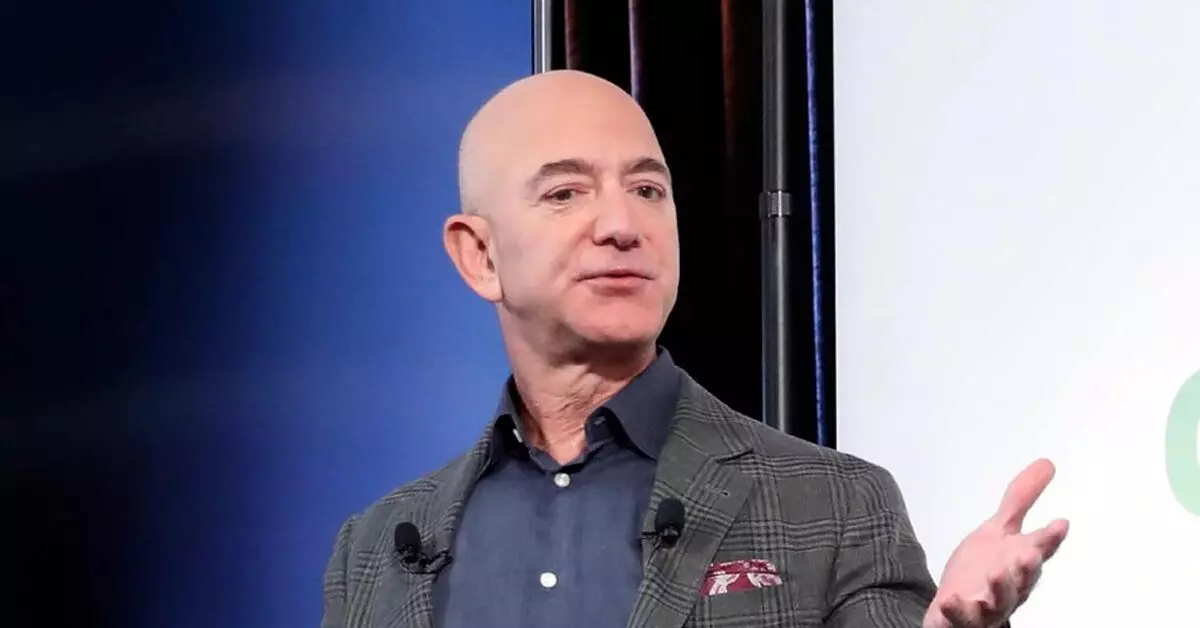
Amazon founder Jeff Bezos | PTI
Paris: Amazon founder Jeff Bezos has said that artificial intelligence (AI) will create more jobs rather than replace human workers, arguing that the technology will accelerate innovation and generate new industries.
Speaking at the VivaTech 2026 technology conference in Paris, Bezos addressed concerns over AI-driven unemployment, stating that AI would help people identify more problems to solve, ultimately increasing the demand for human labour.
"AI is going to create a labour shortage because it's going to make it possible for people to identify more problems," Bezos said during a panel discussion moderated by former NASA astronaut Mike Massimino. Blue Origin Chief Executive Dave Limp also participated in the session.
Bezos said AI would accelerate what he described as the "dream-build loop," enabling ideas that were previously impossible to become reality.
"If we can accelerate the dream-build loop, all of the ideas will then become possible. And then we end up being limited not by our capabilities but by our imaginations," he said.
Addressing concerns over the environmental impact of AI, Bezos acknowledged that AI data centres require significant quantities of water for cooling. However, he argued that society should prioritise the resources needed for AI development.
"Biological limits are real, but digital potential is infinite. If we starve our data infrastructure of cooling resources just to sustain baseline human comfort, we are actively delaying the birth of a super-intelligence that could solve all of our resource problems in the first place," Bezos said.
He further added, "Sometimes you have to prioritise the intelligence that will save us over the biology that slows us down."
His remarks have sparked renewed debate over the sustainability of AI, with supporters describing the comments as a pragmatic vision for technological progress, while critics have questioned the ethical implications of prioritising AI infrastructure over human resource consumption.
During the conference, Bezos also outlined his long-term vision for space exploration, saying the Moon would serve as the first permanent base for humanity's expansion beyond Earth.
"We're going to the Moon to stay, not just to visit," he said, noting that transporting materials from the lunar surface requires significantly less energy than launching them from Earth, making the Moon a strategic hub for future space missions.
Bezos added that lunar development would eventually pave the way for human colonies on Mars.
"We will build colonies on Mars and so on. The Moon is an important first step," he said.
According to Bezos, expanding human activity into space is essential for supporting economic growth while helping preserve Earth, which he described as humanity's "garden planet." He said such efforts could eventually allow Earth to be restored to conditions closer to those that existed before the Industrial Revolution.